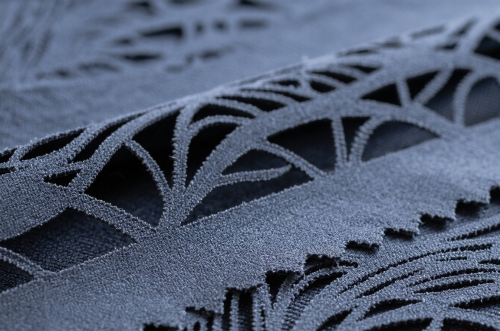
In today’s textile manufacturing industry, which is continuously evolving toward higher value-added production and intelligent upgrading, laser processing technology is gradually becoming an important driving force for industry transformation. A solution centered on the “Galvo Laser Control System (galvanometer laser control system)” demonstrates clear comprehensive advantages over conventional laser control systems in textile fabric processing, thanks to its high-speed scanning and precise control capabilities. Especially in the context of increasingly widespread personalized, small-batch, and multi-variety production models, the galvanometer laser controller is becoming an important technical support for textile enterprises to enhance their competitiveness.
With the continuous increase in market demand and the growing need for high-efficiency and precision processing, CO2 laser cutting has gradually become one of the indispensable technologies in the fabric cutting field due to its superior cutting effect. Laser cutting of textile fabrics is already a very mature and widely used application. A good laser control system is not only the brain of the laser equipment but also a complete set of systematic solutions.
In the fabric cutting production process, the core value of the laser control system used for fabric cutting is mainly reflected in processing efficiency and the stability of operating cycle. The control system not only determines the execution method of the cutting trajectory, but also directly affects the processing capacity of fabric per unit time. Therefore, from a practical application perspective, the differences between single-axis and multi-axis control logic are more reflected in processing speed, path execution efficiency, and the improvement of overall output brought by multi-axis coordination capability.
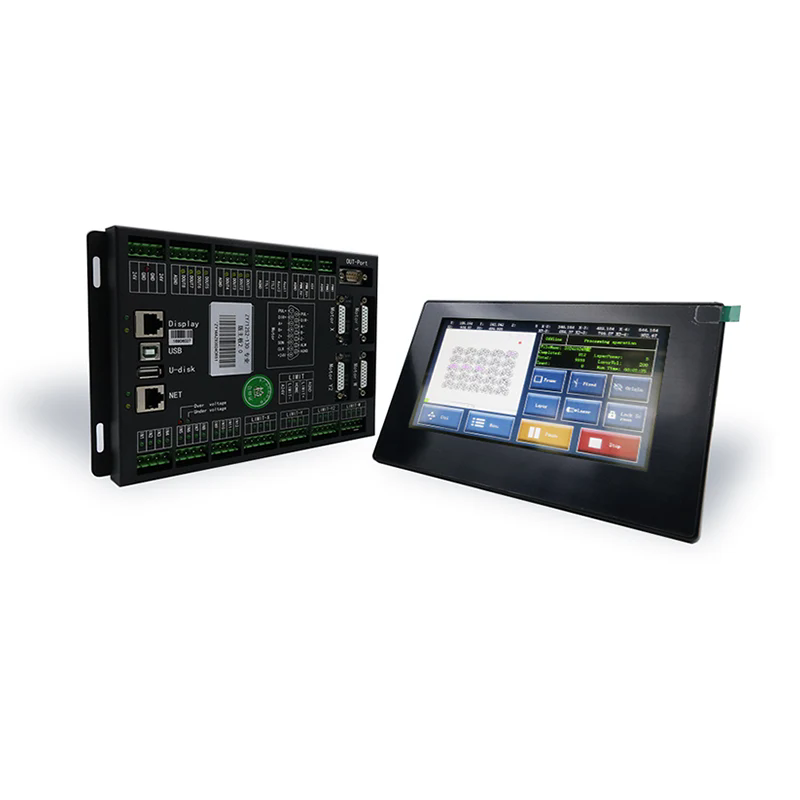
With the rapid development of the modern laser industry, the demand for non-metal material processing is gradually upgrading toward high precision, high speed, and intelligence. Materials such as wood, acrylic, leather, and textiles are increasingly used in advertising production, handicraft processing, clothing manufacturing, and industrial component production, which places higher requirements on the control systems of laser equipment. Ordinary laser control systems are gradually showing problems of response delay and insufficient precision when handling complex trajectories, high-speed motion, and multi-axis coordination. Therefore, the EtherCAT Laser Control Board, which has high real-time performance and high stability, has become an important direction for industry upgrading.
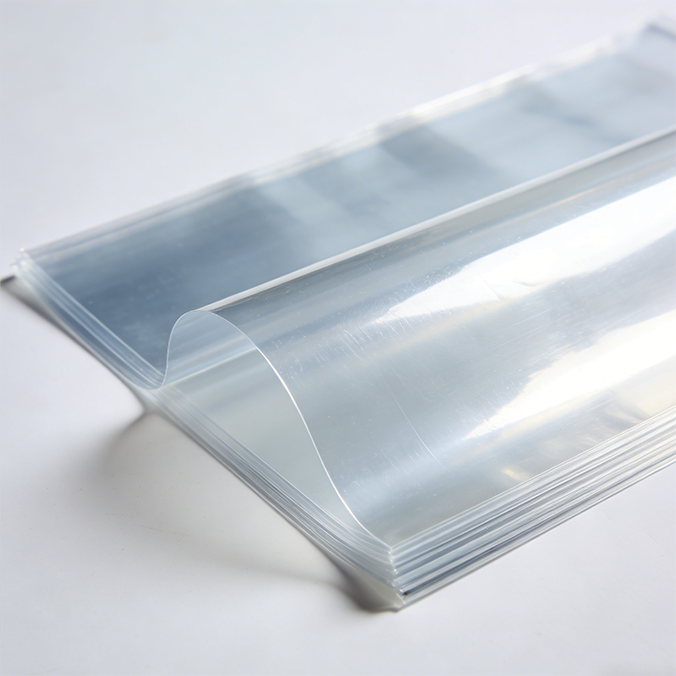
Rotary die cutting is a processing method in which a cylindrical die rotates continuously. This seemingly simple processing method is actually one of the core technologies in modern die cutting processes. The reason why rotary die cutting can become one of the core technologies of die cutting processes is inseparable from its various production advantages such as high efficiency and large-scale continuous production. These significant advantages have also made rotary die cutting favored by multiple industries such as electronics, packaging, and medical.
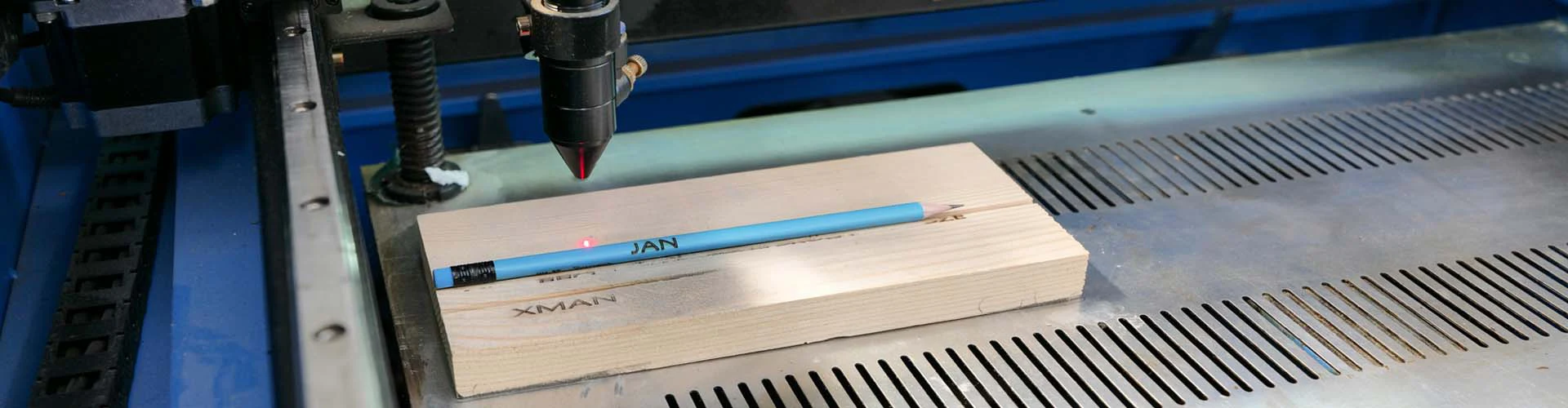
In modern laser processing applications, achieving consistent accuracy, speed, and reliability is a major challenge for manufacturers. A Precision Laser Control Board plays a critical role in solving these issues by acting as the core control unit of laser equipment. This article explores how such control boards enhance performance, reduce errors, and streamline operations across industries such as metal fabrication, electronics, and medical device manufacturing. We will also address common customer concerns and provide actionable insights for selecting the right solution.
We use cookies to offer you a better browsing experience, analyze site traffic and personalize content. By using this site, you agree to our use of cookies. Privacy Policy

 17 2026-04
  16 2026-04
  14 2026-04
  07 2026-04
  07 2026-04
  27 2026-03