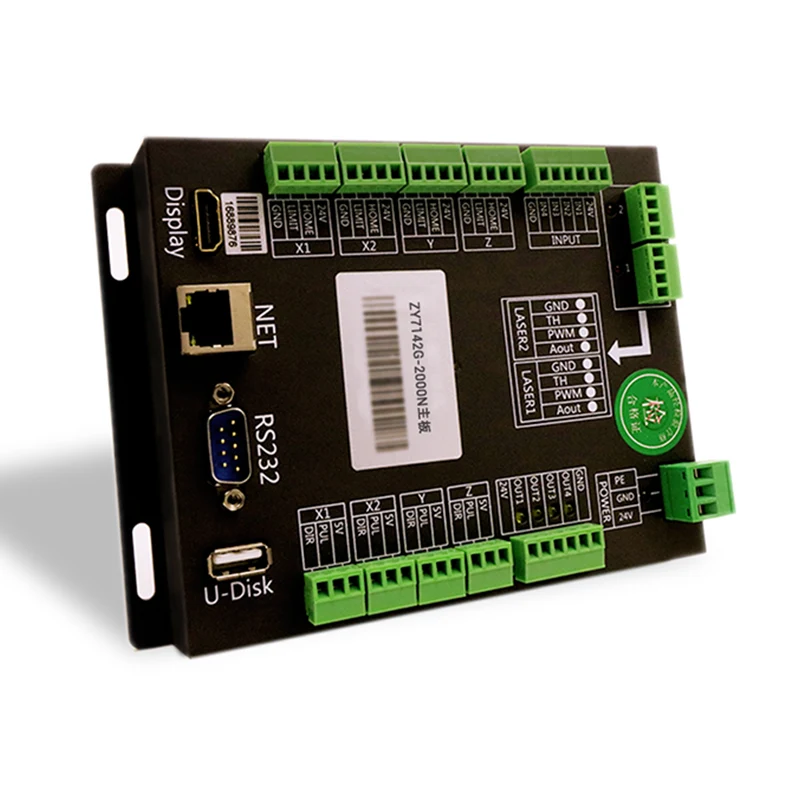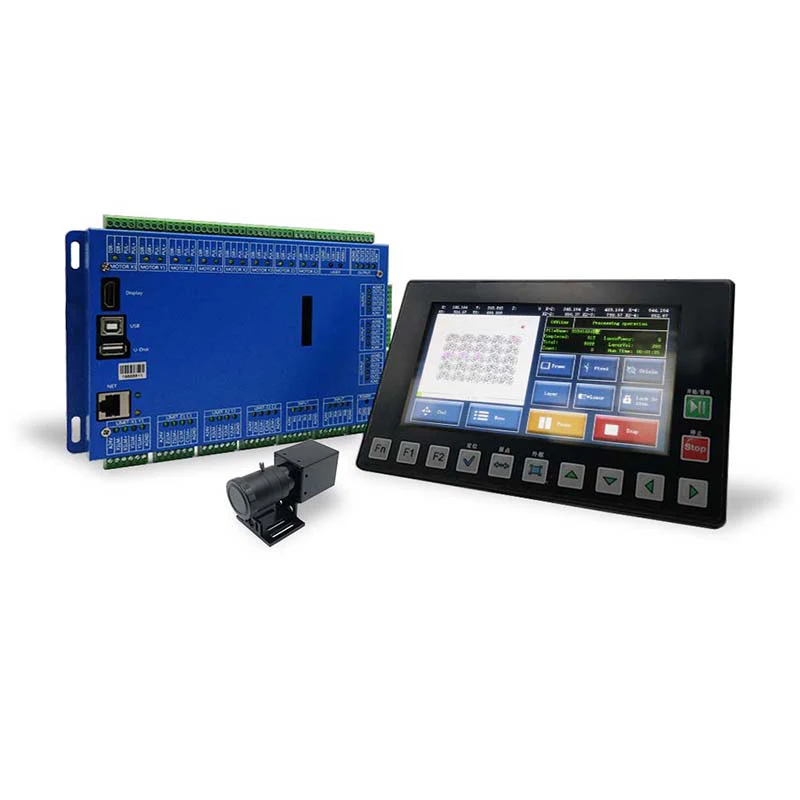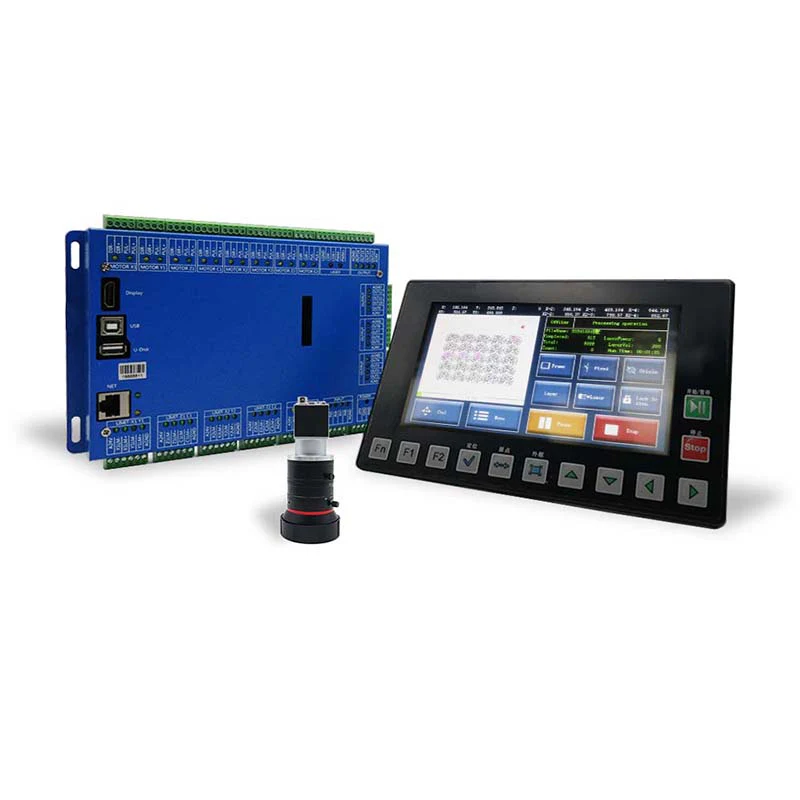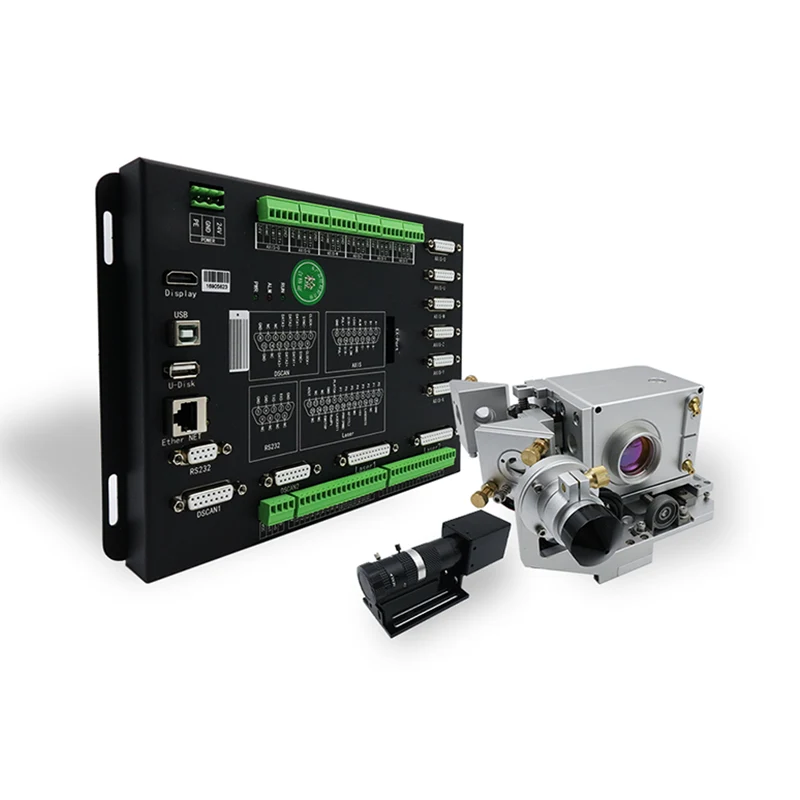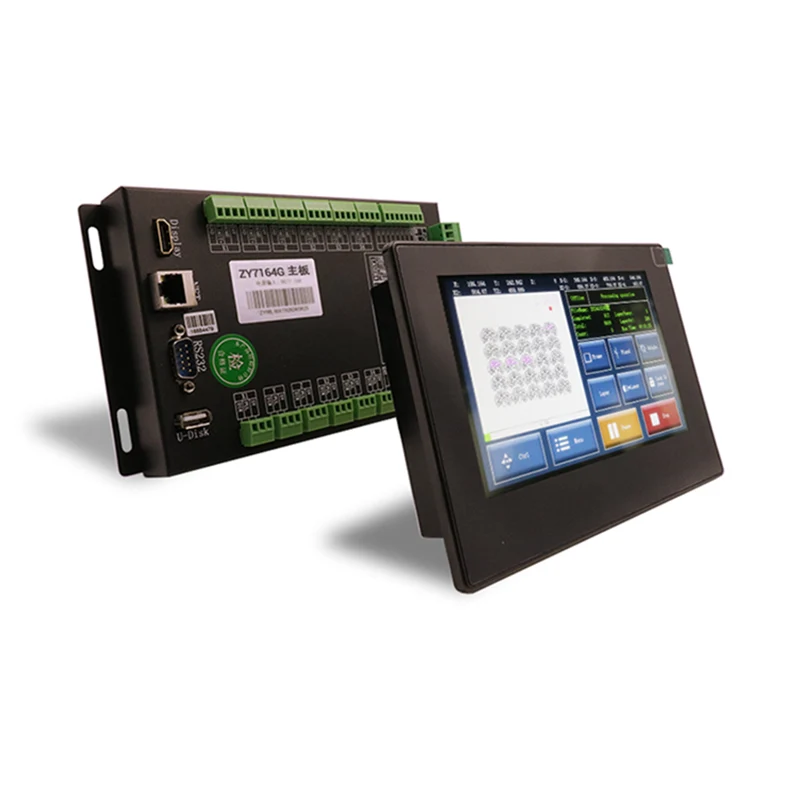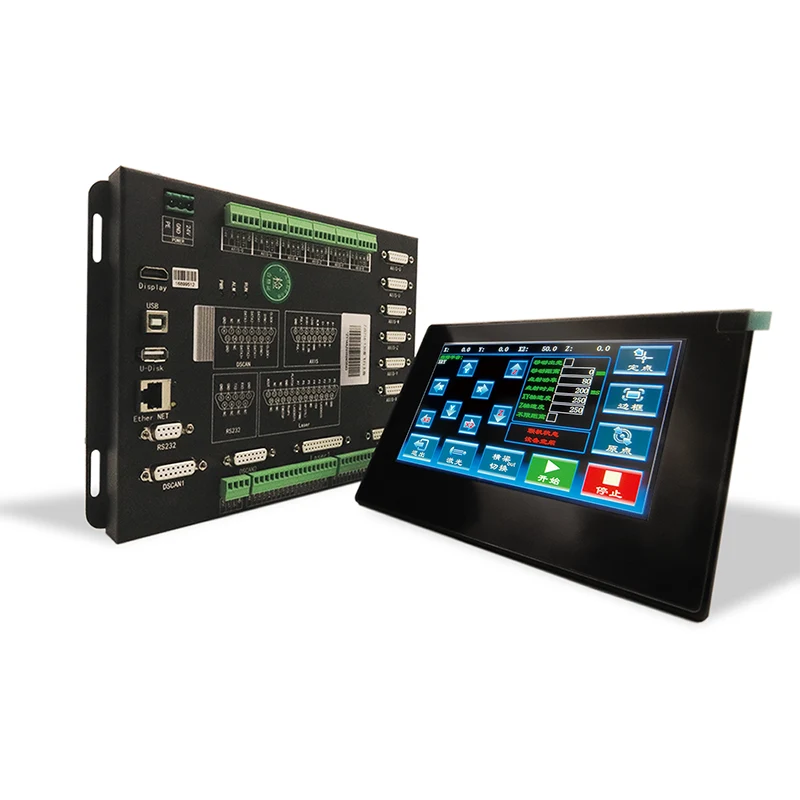
In most non-metal processing workshops, equipment purchasing decisions are often made under a “good enough” mindset. Basic laser motion control systems are inexpensive and easy to deploy, and they are fully capable of handling tasks such as straight-line cutting, rectangular cutting, and simple pattern engraving. However, when the order structure begins to change — customers demand more complex contours, tighter tolerances, and faster production cycles — factories start to realize that the compromises left by control architectures lacking linkage capability are quietly eroding profits order by order. The value of a Multi-Axis Linkage Laser Controller is not reflected in a specification sheet, but in those marginal costs that are silently consumed over time.
Take automotive interior leather components as an example. A door panel wrapping material must be cut precisely along curved edges while perforation and embossing operations are performed in designated areas. If a basic control system without multi-axis linkage capability is used, cutting, perforation, and embossing often need to be completed sequentially in separate stages: the machine first performs contour cutting, then carries out secondary positioning, followed by perforation or embossing operations. Every process transition means the work piece must be repositioned, and repositioning itself is a source of error. A single accumulated deviation may be only 0.15 mm, but during eight hours of batch production, that 0.15 mm manifests itself in various ways: uneven seams, misaligned holes, and rising rework rates. By coordinating the X, Y, Z, and even rotary axes in real time, the Multi-Axis Linkage Laser Controller compresses processes that were previously completed in separate steps into one continuous motion path. The work piece remains stationary while the laser head follows the predefined linkage trajectory throughout the entire process. In actual production lines, this change brings not only higher efficiency, but also a fundamental improvement in quality stability.

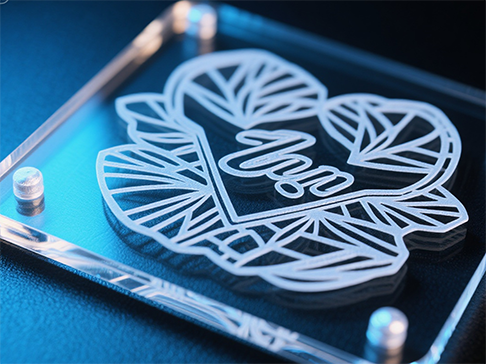
Acrylic (PMMA) laser cutting is one of the most demanding non-metal processing applications for control systems. The uniqueness of this material lies in the fact that cutting quality directly determines the commercial value of the product. An acrylic display stand used in high-end retail environments must achieve optically transparent edges, with cut surfaces exhibiting a naturally polished appearance free of haze, ripples, or serrations. These quality characteristics depend heavily on the smoothness of laser head movement and the consistency of power output.
Traditional basic laser control systems often require multiple passes when processing acrylic thicker than 10 mm to ensure full penetration. The problem with multiple passes is that minor path deviations from each pass accumulate into visible cutting marks on the final surface. The Multi-Axis Linkage Laser Control system supports dynamic Z-axis following, allowing the laser focal point to maintain a more stable energy distribution throughout the cutting process, thereby improving the transparency and consistency of thick acrylic cut surfaces. This is particularly critical when cutting acrylic thicker than 20 mm — Z-axis linkage enables the energy density to remain uniformly distributed throughout the entire cutting depth. For manufacturers producing acrylic letters, light box panels, and jewelry display props, this capability directly affects whether they can take on higher-value, higher-margin orders.
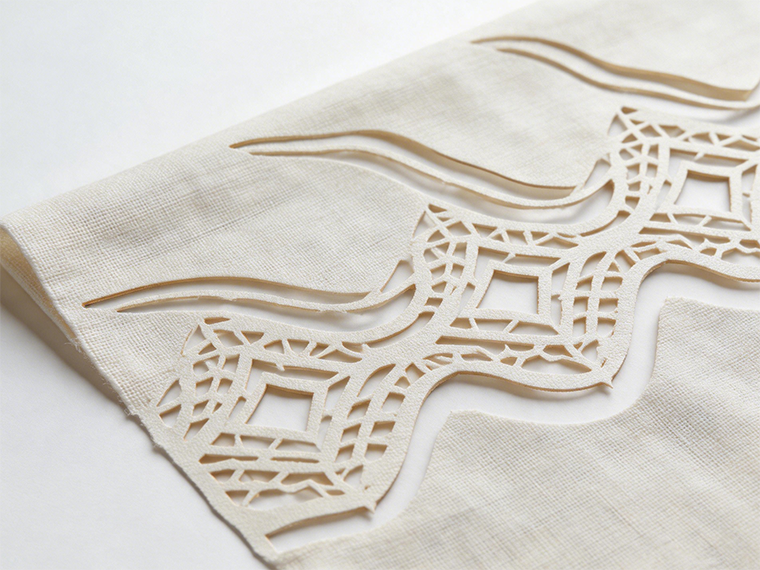
The demand logic for Multi-Axis Linkage Laser Controllers in garment fabrics and industrial non woven materials is somewhat different. Here, the core requirement is not ultimate precision, but the ability to maintain precision at high speeds. A laser system used for cutting sportswear fabrics may produce more than 20,000 pieces per day, with each contour cutting cycle lasting only a few seconds. At this speed range, the acceleration/deceleration response and trajectory continuity of basic control systems become bottlenecks.
Of course, basic control systems are not without their place. For applications with single-purpose tasks, regular product shapes, and relatively loose cutting accuracy requirements — such as engraving simple signage, rough cutting rectangular fabrics, or straight-line cutting of packaging cardboard — basic control architectures still possess clear economic advantages due to their low procurement and maintenance costs. The key issue is not which controller is “better,” but whether your product structure has already exceeded the capability boundary of a basic control system. Once customers begin demanding curved contours, compound processes, and multi-thickness switching, the control capability that was once “good enough” gradually becomes a production bottleneck. This transition rarely has a clear turning point; instead, it appears in the form of slowly accumulating rework costs and the loss of high value-added orders.
This kind of process knowledge accumulation is difficult to achieve on basic control systems lacking linkage capability. In contrast, control platforms with multi-axis linkage capability are better suited to transforming complex processing procedures into reusable digital process models. Large numbers of critical parameters no longer rely entirely on operators’ experience for on-site adjustments, but can instead be reused, replicated, and optimized in the form of standardized process packages. The boundaries of non-metal material processing are continuously expanding, while new materials, new applications, and new customer requirements are driving equipment control capability toward higher dimensions. Processing enterprises that complete this technological transition in advance will gain a significant first-mover advantage in the next round of product iteration.